Lin Zhao’s (1932–1968) Blood Letters

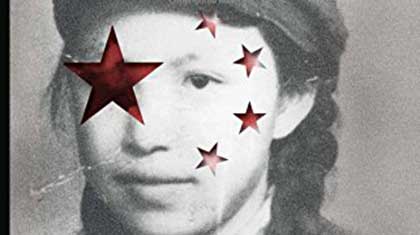
[ABOVE: Detail from the cover of Blood Letters]

Lin Zhao was raised a Christian in China. She never renounced Christ but, horrified at the atrocities of the governing Nationlists, sided with the Communists, believing their promises of a rosy, peasant-friendly future. Well-educated, she used her knowledge of Chinese literature, especially poetry, to produce idealistic propaganda.

After Mao seized power, delusion began to set in. She found that freedom of speech rapidly eroded. Soon she was in trouble and sent for re-education. Party representatives at the local level used their petty authority to sexually harass her and to topple opponents with lying denunciations. She vacillated between hope and despair for the Communist party, eventually becoming a “reactionary” and resistor. She helped produce underground resistance papers and wrote for them.

Imprisoned, she followed the time-honored Chinese practice of writing protests and letters in her own blood. Some of her productions were elaborate and lengthy, others pithy and to the point. Somehow she managed to survive, despite defiant refusal to conform, and despite her tuberculosis. She found strength in her childhood faith as she experienced denunciations, torturous handcuffing, exposure, hunger, beatings by fellow inmates (sicced on her by prison authorities), and solitary confinement. More than once she tried to commit suicide “as an exclamation point in the epic of the struggle of free humanity.”

Nonetheless, she sang hymns in her cell, held solitary Sunday services, and stood up to defend God when Christians were maligned. She wrestled with Christian concepts of forgiveness in light of the monstrosities of Mao and his henchmen, seeing some sparks of humanity in them, callused though they had become. One of her last writings spoke of her struggle to set aside her self-will under Christ’s lordship.

On 29 April 1968, she was taken from a hospital bed in her hospital gown and shot. As was common in such cases, the government presented her family with a bill for the bullet. By law her writings had to be preserved by the prison authorities. Many pages were released eleven years later during Chairman Deng Xiaopeng’s reforms, which removed the stigma attached to many former “rightists.”

In a way, Lin Zhao’s blood letters spoke for millions who perished in China during the Red takeover and subsequent Cultural Revolution. The millions did not have her classical eloquence to record their resistance against the Maoist regime but, like Lin, they gave their blood.

The following excerpts are from Blood Letters, the Untold Story of Lin Zhao, a Martyr in Mao’s China, by Lian Xi. (New York: Basic Books, 2018.) The first two are from her “Letter to the editorial board of the People’s Daily,” 1965. The third is from her last blood letter to her mother.

As a Christian, my life belongs to my God…In order to stick to my path, or rather my line, the line of a servant of God, the political line of Christ, this young person paid a grievous price…. I have come to see more clearly and deeply the many terrifying and shocking evils committed by your demonic party. I grieved and wept for them! Yet even when I touched the darkest, the bloodiest, and the most savage center of your power–the core evil–I still glimpses, I did not completely overlook, the occasional sparks of humanity in you…. Then I cried in even greater anguish! I cried for your blood-smeared souls, which are unable to rid themselves of evil and are dragged by its terrifying weight ever deeper into the swamp of death…. Gentlemen, those who enslave others can never be free. What a merciless but certain truth in your case!

Grind me into powder if you wish. Every bit of my broken bone will be the seed of a resister.

Generally speaking, I tend to be overconfident in handling various problems! This is a serious problem especially for a Christian! There is too much of “me”; as a result there is too little, or almost nothing, of the Lord!….I affirm myself too much! And I forget my Lord! I forget that in my proper station, I am but a servant!….Alas, dear Mama, how hard it is for faith to come from the flesh!
A Toyohiko Kagawa (1888–1960) Prison Poem

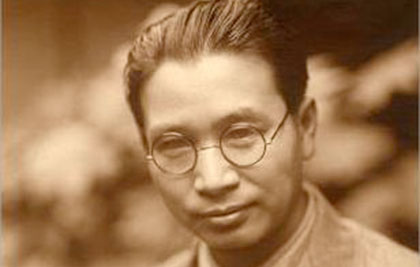
[ABOVE: Kagawa—賀川豊彦記念・松沢資料館 (賀川豊彦記念・松沢資料館) / public domain, Wikimedia Commons File:KAGAWA Toyohiko young.JPG (note: this may not be the Toyohiko Kagawa of our story)]

Toyohiko Kagawa went to prison the first time for arson. He had set fire to buildings for kicks. Later as a Christian and a pacifist, he went to prison for a far nobler reason: he opposed a Japanese war of aggression.

Kagawa was a rare intellectual. Not one to theorize without action, he left his upper-class home to voluntarily work in the slums, seeking to demonstrate the love of Christ there. Throughout his life, he wrote books and poems. Below is a poem written while he was in prison.

If Only There Are Stars (Translated by Lois J. Erickson)

If only there are stars,
I have my friends.
But in the dark
I think upon my fate,
And all
My spirit sickens
And the hard tears fall.

Around my prison
Runs a high stockade;
And from my wrist
Chains dangle;
But no power
Can lock my eyes.

So can I steal
This lovely light
That wraps me—
This radiance
That drips
Out of the Dipper.
Dragging my chains
I climb
To the tall window-ledge;
And though
My body cannot crawl
Between those grim iron rods,
Still can I
Laugh as my spirit flies
Into the purple skies!

Northward and northward,
Up and up,
Up to the world of light
I go bounding;
Farewell, O Earth, farewell,
What need I now of your freedom?

Fearless, I fly and fly,
On through the heavenly sky;
Breaking all prison bars,
My soul sleeps with the stars!

James Montgomery (1771–1854) Frisks Along a River Bank Following His Release from Jail

[ABOVE: James Montgomery—Theron Brown and Hezekiah Butterworth, Story of the Hymns and Tunes. New York: George H. Doran, 1906. Public domain]

James Montgomery was no criminal, but spent time in prison all the same. He had become editor of a newspaper, the Iris Sheffield, and the jittery British government twice imprisoned him for printing details which it claimed were subversive. The record seems to show that Montgomery had not intended subversion in those particular articles, but that he was sympathetic towrd the French Revolution. Furthermore, he may have authored anonymous satires in support of Parliamentary reform. This kind of agitation was not well-received by the government.

Montgomery also wrote hymns and poems. Asked which of his poetical works would be remembered, he reckoned that none would, unless it were a few of his hymns or religious pieces. However, in his own day, a narrative poem was highly praised, Wordworth writing to him that “From the time I first read your ‘Wanderer in Switzerland,’ I have felt a lively interest in your destiny as a poet.” Today, serious students of English literature know his name, but otherwise he is a footnote, and it is as he said: his hymns find scattered inclusion in hymnals, and little more. The verse which has fared best is one of his carols. You may have sung or heard it: “Angels from the Realms of Glory.” On the whole, Montgomery‘s work was too malencholy and lacking in genius to last.

Some of the poems which appeared in his first volume of poetry, The Prison Amusements, were written during his incarceration. These are not particularly quotable. Of greater interest are his comments on his first stint in prison, which we reproduce below.

During his first imprisonment, which lasted only three months, he longed greatly for the freedom to walk abroad. His description of his first walk after being unloosed is delightful. And while it has no spiritual power, it has freshness, and any young prisoner might react the same upon release.

Excerpt from The Poetical Works of James Montgomery, 1841

The room which I occupied overlooked the castle walls and gave me ample views of the adjacent country, then passing from the forlornness of winter to the first blooms of a promising spring. From my window I was daily in the habit of marking these, and dwelt with peculiar delight on the well-known walk by the river Ouse, where stood a long range of well-grown trees, beyond which, on the left, lay pasture fields that led towards a wooden windmill, the motion and configuration of whose arns, as the body was turned about, east, west, north and south, to meet the wind from every point, proved the source of very humble, but very dear pleasure to one with whom it was ever as a living thing—the companion of his eye and the inspirer of his thoughts, having more than once suggested grave meditations on the vanity of the world, and the flight of time.

During such reveries, I often purposed that my first ramble, on recovery of my freedom, should be down by that river, under those trees, across the fields beyond, and away to the windmill. And so it came to pass. One fine morning, in the middle of April, I was liberated. Immediately afterwards I sallied forth, and took my walk in that direction—from whence, with feelings which none but an emancipated captive can fully understand, I looked back upon the castle walls, and to the window of that very chamber from which I had been accustomed to look forward, both with the eye and with hope, upon the ground which I was now treading, with a spring in my step as though the very soil were elastic under my feet. While I was thus traversing the fields, not with any apprehension of falling over the verge of the narrow footpath, but from mere wantonness of instinct, in the joy of liberty long wished for, and, though late, come at last, I willfully diverged from the track, crossing it now to the right, then to the left, like a butterfly fluttering here and there, making a long course and little way, just to prove my legs, that they were no longer under restraint, but might tread where and how they pleased; and that I myself was in reality abroad again in the world—not gazing at a section of landscape over stone walls that might not be scaled; nor when, in the castle yard, the ponderous gates, or the small wicket, happened to be opened to let in or let out visitors or captives, looking up the street from a particular point which might not be passed. Now to some wise people this may appear very childish, even in such a stripling as I was then: but the feeling was pure and natural, and the expression innocent and graceful as every unsophisticated emotion and spontaneous manifestation must be.

Daniel Defoe (1659–1731) Glorifies the Pillory, Instrument of His Shame and Punishment

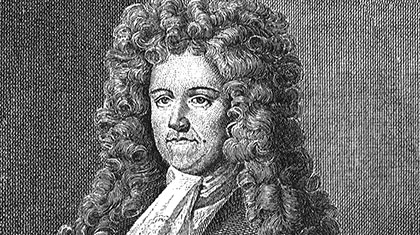
[ABOVE: Daniel Defoe, from an engraving in the British Museum—Walter Besant, London in the time of the Stuarts. Adam and Charles Black, 1903. Public domain]

Daniel Defoe is best known as the author of Robinson Crusoe, Moll Flanders, and A Journal of the Plague Year. These fictions capture the Puritan interest in the progress of the soul toward repentance. Defoe was also a religious dissenter (one who rejected the established church) and a political satirist. (His Review laid the foundation for journalism independent of government sponsorship; he commenced it as a weekly but soon issued it three times a week, and wrote every article himself for nine years). A satire of his, titled, “The Shortest Way with the Dissenters,” landed him in prison and compelled him to appear three times in the pillory. Defoe had extended High Church arguments to a ridiculous and savage length, but the satire was so cleverly written it was seriously accepted by both sides, until exposed as a hoax. The national fury was intense.

While in prison, Defoe published several works, including a pamphlet calling Dissenters to acknowledge the value of the national church and the national church to grant full tolerance to Dissenters. Along with this, and perhaps with the intent to draw the sting from his punishment, Defoe published his “A Hymn to the Pillory.” He was something of a hero with the crowd so that, it is said, instead of hurling at him the customary stones and rotten eggs, they pelted him with flowers. Consequently, it was the government, not himself, that was shamed. Below is an excerpt from his verses on the occasion.

Excerpts from “A Hymn to the Pillory”

…Actions receive their tincture from the times,
And as they change, are virtues made or crimes.
Thou art the state-trap of the law,
But neither can keep knaves nor honest men in awe;
These are too hardened in offence,
And those upheld by innocence.

How have thy opening vacancies received
In every age the criminals of state!
And how has mankind been deceived
When they distinguish crimes by fate!
Tell us, great engine, how to understand
Or reconcile the justice of the land;
How Bastwick, Prynne, Hunt, Hollingsby, and Pye,
Men of unspotted honesty,
Men that had learning, wit, and sense,
And more than most men have had since,
Could equal title to thee claim
With Oates and Fuller, men of later fame:
Even the learned Selden saw
A prospect of thee through the law:
He had thy lofty pinnacles in view,
But so much honor never was thy due:
Had the great Selden triumphed on thy stage,
Selden, the honor of this age,
No man would ever shun thee more,
Or grudge to stand where Selden stood before.

Thou art no shame to truth and honesty,
Nor is the character of such defaced by thee
Who suffer by oppressed injury.
Shame, like the exhalations of the sun,
Falls back where first the motion was begun;
And they who for no crime shall on thy brows appear,
Bear less reproach than they who placed them there…

John Donne (1572–1631) Adds an Epigram to Prison Literature

[ABOVE: The house Donne and family occupied at Pyrford with inset of Isaac Oliver’s portrait of Donne—house by SuzanneKn / both images public domain, Wikimedia]

Thrown into prison in retaliation for his elopement with Anne More, John Donne wrote one of the most famous epigrams of all time. At a considerably later date, he became Dean of St. Paul’s Cathedral, London.

Donne was the most illustrious of the metaphysical poets. His earliest works were often erotic; his later work consisted chiefly of profound religious poetry.

Donne’s Epigram

John Donne, Anne Donne, Undone

Robert Southwell (c.1561–1595) Was Tortured for Priestly Actions

[ABOVE: Saint Robert Southwell, S.J.—Frontispiece, Saint Peter’s complaint / public domain, Wikimedia]

Robert Southwell, a young Jesuit priest, asked to be sent to England, although, because of Catholic plots against Queen Elizabeth’s life, it was illegal for any Catholic priest to remain in the island more than forty days. He arrived in 1586. For the next three years he ministered to Catholics, moving from house to house to offer the sacraments. In 1589 he became chaplain to Ann Howard.

During those years he wrote many religious tracts, some poems (“Mary Magdalen’s Funeral Tears” was published in 1591) and an appeal to Queen Elizabeth.

Ultimately a Catholic girl revealed Southwell’s movements after she was raped and interrogated by one of Elizabeth’s top torturers. Southwell was arrested and tortured for a month, and cast into such filth that he was covered with vermin when brought out for examination. Despite his torments, Southwell refused to betray fellow-priests.

His father petitioned Elizabeth for more humane treatment. Nonetheless, Southwell was tortured ten times over his three years. He was, however, placed in the tower, and allowed clean clothes. Finally he was condemned to die the death of treason by being hanged, drawn, and quartered. When he was hung, friends pulled on his legs to strangle him quickly so that he would be dead when disemboweled and pulled apart by the horses.

To the end of his life, Southwell insisted truthfully he was never guilty of any plot against Elizabeth, but only of performing the duties of a priest. His concern for souls was evident even in prison where his writings were religious in nature.

Southwell’s St. Peter’s Complaint was published with other poems in 1595, the year of his execution. Probably these poems were written in prison. “The Burning Babe” is one of his most famous pieces. It is an excerpt from St. Peter’s Complaint.

“The Burning Babe” from Robert Southwell’s St. Peter’s Complaint.

As I in hoary winter’s night
stood shivering in the snow,
Surprised I was with sudden heat
which made my heart to glow;
And lifting up a fearful eye
to view what fire was near,
A pretty babe all burning bright
did in the air appear;
Who, scorchëd with excessive heat,
such floods of tears did shed
As though his floods should quench his flames
which with his tears were fed.
Alas, quoth he, but newly born
in fiery heats I fry,
Yet none approach to warm their hearts
or feel my fire but I!
My faultless breast the furnace is,
the fuel wounding thorns,
Love is the fire, and sighs the smoke,
the ashes shame and scorns;
The fuel justice layeth on,
and mercy blows the coals,
The metal in this furnace wrought
are men’s defilëd souls,
For which, as now on fire I am
to work them to their good,
So will I melt into a bath
to wash them in my blood.
With this he vanished out of sight
and swiftly shrunk away,
And straight I callèd unto mind
that it was Christmas day.

Theodulf of Orleans (750–821) Pens a Praise-Hymn in Prison

[ABOVE: Theodulf was imprisoned in a monastery near Angers (in modern France). This is the Tour des anglais, Angers—Glabb (own work) [CC BY-SA 3.0], Wikimedia]

In Theodulf we see a political prisoner. Louis the Pious suspected this bishop of conspiring against him with Bernard of Italy. The charge was never proven. Nonetheless, the king treated him as guilty.

Imprisoned in a walled monastery, Theodulf’s living conditions were not unlike those of a typical modern prisoner, from the size of his cell to the extent of his boundaries and restrictions on his daily movement. The food was considerably worse, and scantier, but so it was for everyone in the monastery. And there were no showers.

While incarcerated, he penned a praise hymn which the church still sings, especially at Easter. The original had 39 verses. Hymnals pare it down considerably. This is one of those reduced versions.

All Glory, Laud and Honor

Thou art the King of Israel,
Thou David’s royal Son,
Who in the Lord’s Name comest,
The King and Blessèd One.

Refrain:
All glory, laud and honor,
To Thee, Redeemer, King,
To Whom the lips of children
Made sweet hosannas ring.

The company of angels
Are praising Thee on High,
And mortal men and all things
Created make reply.

The people of the Hebrews
With palms before Thee went;
Our prayer and praise and anthems
Before Thee we present.

To Thee, before Thy passion,
They sang their hymns of praise;
To Thee, now high exalted,
Our melody we raise.

Thou didst accept their praises;
Accept the prayers we bring,
Who in all good delightest,
Thou good and gracious King.